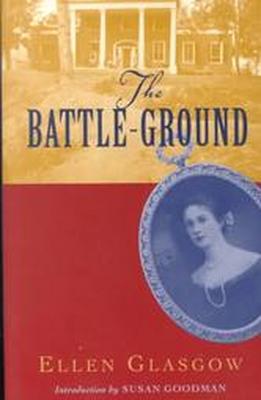
The Battle-Ground
- List Price: $22.50
- Binding: Paperback
- Publisher: Univ of Alabama Pr
- Publish date: 05/01/2000
The Battle-Ground conspicuously departs from the tradition of Southern romances popularized by Thomas Nelson Page, and contemporary reviewers praised the book for its historical accuracy. Glasgow, an ardent Anglophile, bragged that military officers in Great Britain studied its descriptions of battle. With her, realism had not only crossed the Atlantic, it had "crossed the Potomac".
But Glasgow never sensationalizes the Civil War, whose bloodiest scenes she flanks with domestic officers, the sharing of rations, the warmth of camp, and reminders of home. Her vision of the war centers less on its corruption or barbarity than on its occasions for small decencies and their power of humanization. Glasgow cannot separate the war from its greater social implications -- it is a place, as her title suggests, that tests the soul of a nation as well as individual men and women. The importance of TheBattle-Ground in Southern literary history cannot be overemphasized, for Glasgow's reimagining of the Civil War had a profound impact on the next generation of Southern writers, including Allen Tate, Stark Young, and Margaret Mitchell.